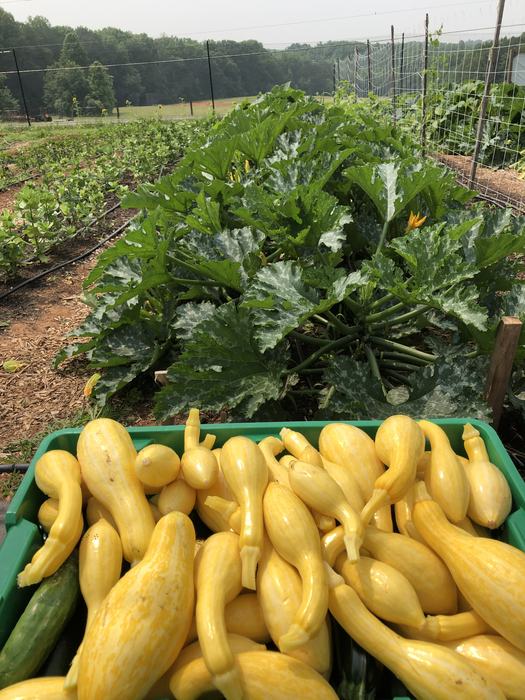
Squash is a popular summer vegetable for many gardeners. However, one challenge when growing squash is a common pest called squash bug. This insect can be a serious pest problem on not only yellow squash but also related cucurbit vegetables such as zucchini and pumpkins.
Squash Bugs on Cucurbits
(Updated: July 18, 2023, 1:04 p.m.)
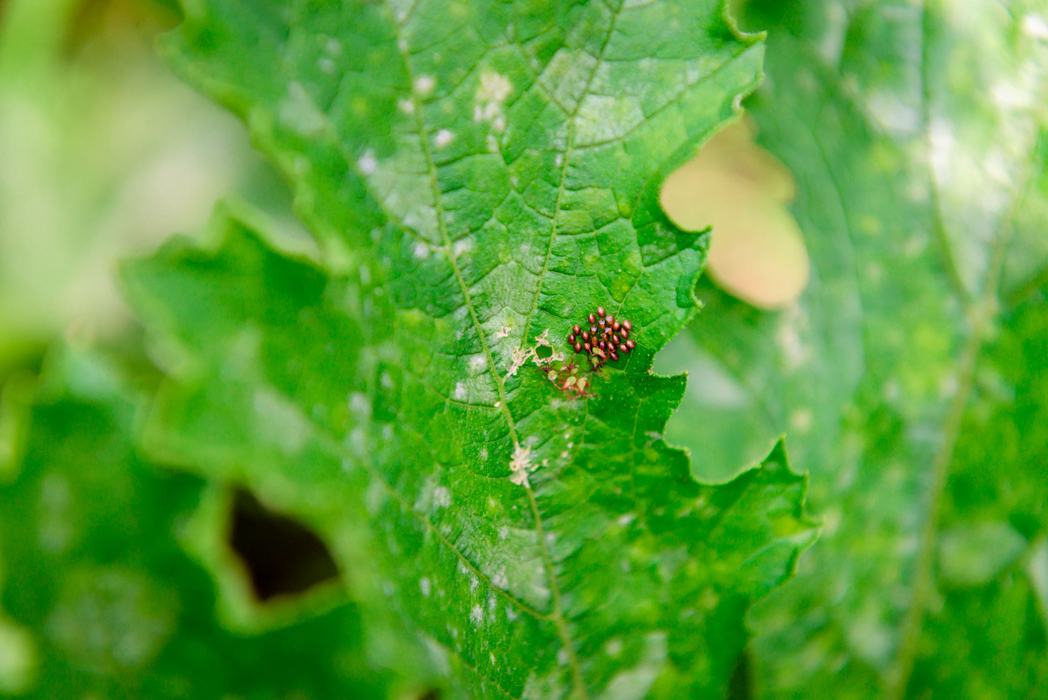
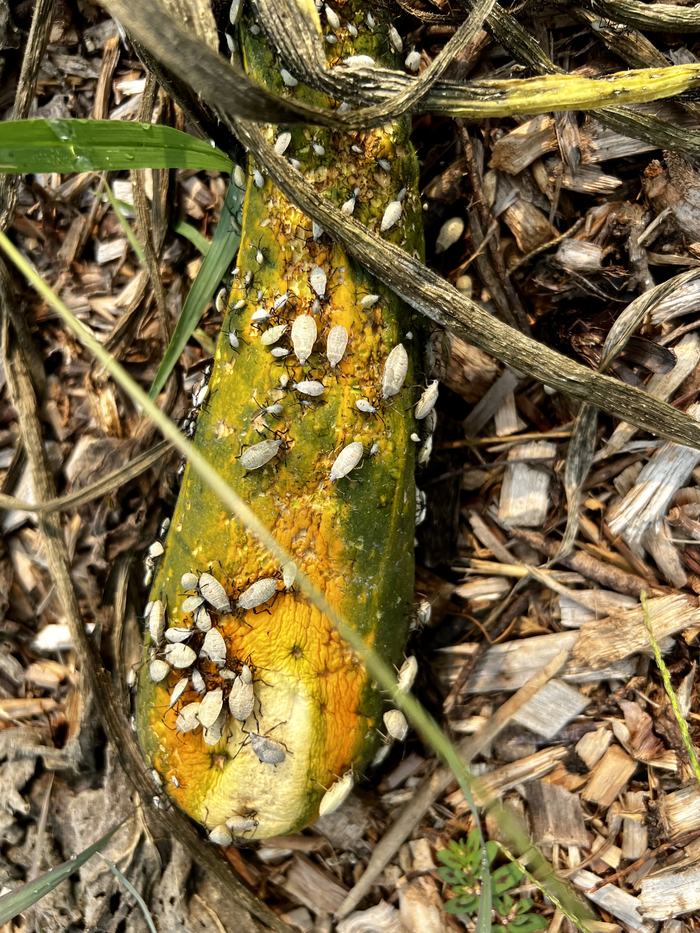
The life cycle of the squash bugs begins with the unmated adult bugs overwintering in protected areas like under plant debris and then emerge in the spring. When they emerge, they seek out squash plants to feed on and other adults for mating. The females will lay clusters of about 20 bronze/copper colored eggs on the underside of leaves, commonly where two leaf veins meet to form a V, or on the stems, though, clusters can still be found elsewhere on the plant. The eggs begin to hatch in 1-2 weeks, typically from mid-May to mid-June. The newly hatched nymphs will have a black head and legs with light green bodies. As they grow, they turn light gray as they become adults. The adult bugs are brownish-black and about 5/8” long.
It takes about 5 weeks for the squash bug to complete its life cycle from egg to adult. In the piedmont, you can expect at least two generations of these insects in May and again in August, so keep a close eye on your plants scouting for both adults and their egg clusters.
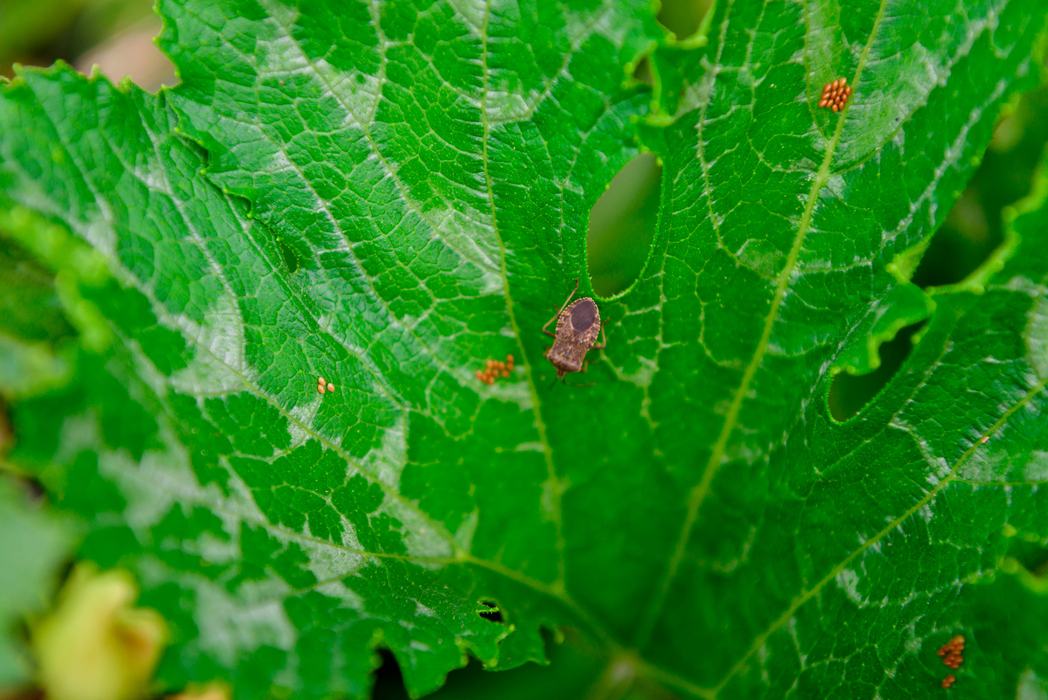
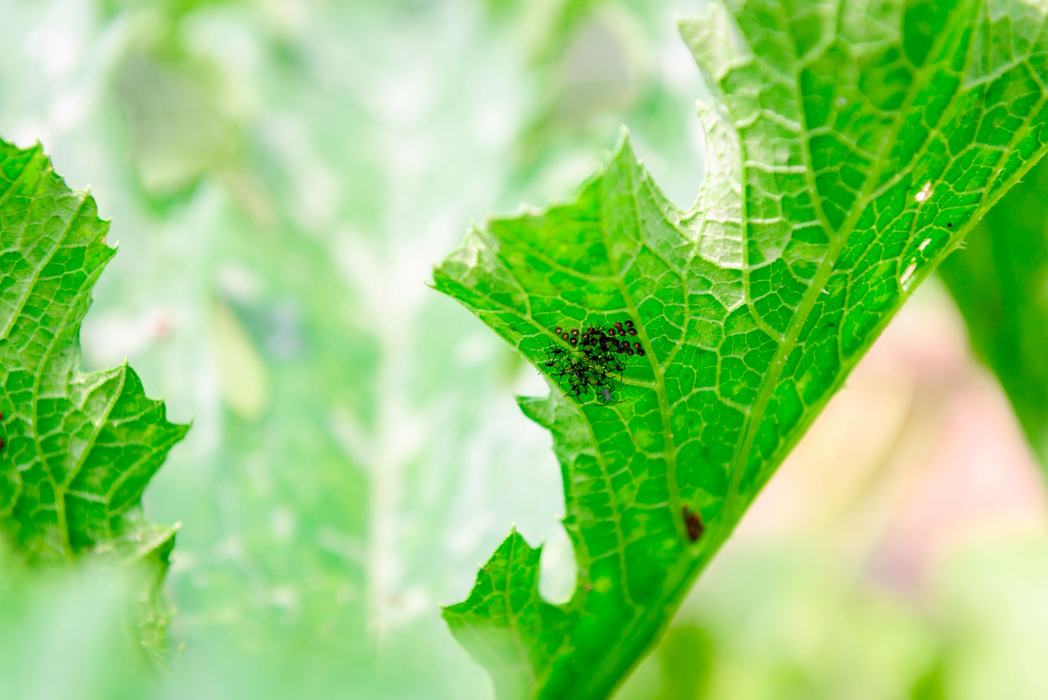
Squash bugs have straw-like or piercing-sucking mouthparts they stick in the plant and suck the sap out similar to how we would drink from a juice box. The symptoms that show up on squash plants will be yellow spots on the leaves where they have fed. The leaves will eventually turn brown and die. A squash bug’s damage will also disrupt flow of water and nutrients to leaves causing the leaves to wilt. Squash bug feeding can reduce yields and eventually can cause plant death.
There are several strategies listed below for controlling squash bugs:- Since squash bugs overwinter on plant debris, it is important to do a good clean up in the fall by removing all plant debris.
- Squash bugs can also hide out in mulch, so removing mulch may also be necessary where populations are increasing.
- It is important to keep plants healthy and avoid stresses like lack of water, close spacing, etc. to help the squash plants to be more tolerable of insect damage.
- Early control is essential, not just because younger plants are more prone to damage but also because they are more difficult to kill the older they get.
- Frequent scouting and handpicking are effective, especially when you have only a few squash plants to care for. Squash bugs can simply be knocked off into a bucket of soapy water.
- Look for copper colored egg masses on underside of leaves and crush them.
- Do note that squash bugs are “shy”. They will run quickly for cover when disturbed so you will have to hunt for them on the underside of leaves and in center of the plant. Since they are “shy” you can set a trap for them. Place boards, pieces of newspaper, or cardboard out in the garden near plants. Squash bugs will congregate under them at night and then come morning, you can destroy/dispose of them.
- Plant earlier in the season, in early April, will allow you to harvest squash before squash bug populations’ increase. However, remember to prepare for frost protection if planting early.
- Insecticides can be used but will be most effective on young nymphs than the older adults.
- Note that when plants are blooming to avoid applying insecticide during bee activity. Bee activity is at a minimum early in the morning or in the evening. Active ingredients of some common insecticides that can be used for controlling squash bugs includes: Permethrin, Acetamiprid, Spinosad, Malathion.
Recommendations for the use of agricultural chemicals are included in this article as a convenience to the reader. The use of brand names and any mention or listing of commercial products or services in this article does not imply endorsement by North Carolina Cooperative Extension nor discrimination against similar products or services not mentioned. Individuals who use agricultural chemicals are responsible for ensuring that the intended use complies with current regulations and conforms to the product label. Be sure to obtain current information about usage regulations and examine a current product label before applying any chemical.
Adapted from and article originally written by Jessica Strickland, agriculture extension agent, N.C. Cooperative Extension, Wayne County Center.
Join our mailing list!
Enter your email address to receive updates.
Written By