In reference to gardening with perennials, you may have heard the adage "first they sleep, then they creep, then they leap." In other words, perennials take a few seasons to establish in your garden. Once they do, it may be time to divide them. Many gardeners are intimidated by the prospect of dividing perennials in the garden. However, when done correctly, overcrowded perennials will benefit from division.
How do I know if perennials in my garden need to be divided?
There are a few signs that can indicate that herbaceous perennials need to be divided in the garden. As plants get crowded, they may flower less or start to have a "bald" spot at the center of their crown. Other plants may stretch, growing tall and subsequently flopping in the garden. In other cases, you may choose to divide perennials because they are taking up more space than you'd like, or because you want to move them around your garden or share with friends.
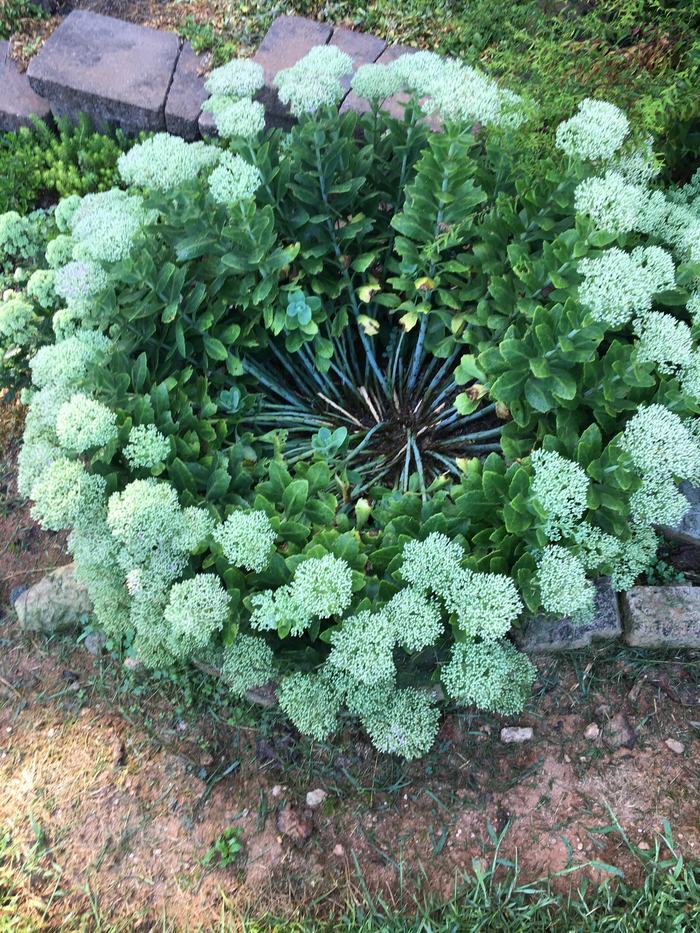
The "bald" spot in the center of this sedum plant is an indication that it may need to be divided.
I have perennials that need to be divided. How should I approach this?
Spring and fall are the best seasons for dividing perennials. Similar to adding new plants, the cooler weather during these seasons allows you to divide and move plants in the garden with less stress to the plant. Divide plants when they are not blooming. Plants in flower devote most of their energy to reproducing and will have trouble dealing with the stress on their root systems involved with dividing and moving them. Generally speaking, try to divide plants that bloom in the fall during the spring, and divide plants that bloom in the spring during the fall.
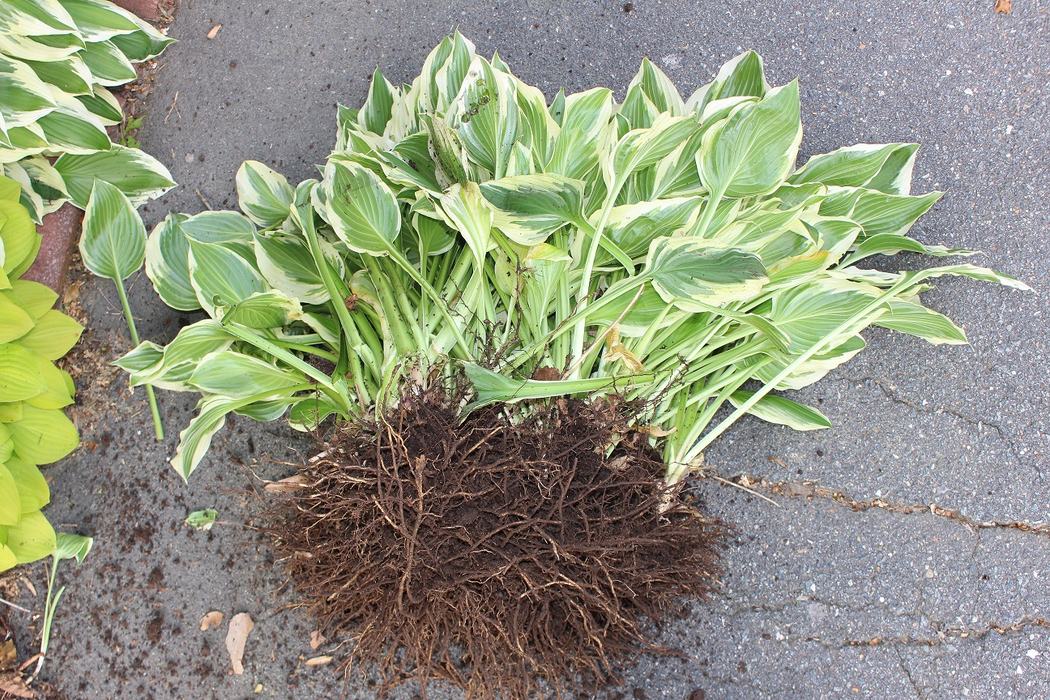
This hosta has been dug up and is ready to be divided.
When you are ready to divide your plants, pick a cool, cloudy day. It is best if there has been recent rainfall or irrigation. Then, follow these steps to divide a plant:
Dig up the plant, ensuring that you get a piece of both root and shoot.
Divide the roots. You can tease apart roots of clumping perennials using a spading fork. Plants with fleshy roots may need to be cut into pieces.
You can return what is left of the original plant to its spot in the garden. Then, space the divisions like they are new plantings and plant them in your garden. It is best to plant divisions immediately. Note: if your plants are actively growing at the time of the division, cutting back the foliage will help reduce stress on the plant. Removing extra foliage can reduce moisture lost by transpiration in the leaves and also help the plant stand up better. Try cutting back one-third of the foliage.
Water your plants well after you've finished dividing and moving them.
Continue to monitor your divided plants through the season, watering as needed to help them get established in the garden. These plantings will need more attention during the first year after they have been divided than they will in future years.
Watch these videos to learn more about dividing perennials in the garden:
A gardening friend has extra plants to share. Is it a good idea for me to add them to my garden?
Free plants are exciting to many gardeners. Gardening with passalong plants has a long history. Gardeners moving to new areas bring plants along as a reminder of home, and trade them amongst themselves to diversify their landscapes. While the price of passalong plants is right, you should take some steps to learn about the plants before adding them to your garden.
First, be sure you know the scientific and common name of the plant. This helps you locate accurate information about the plant and what it needs to grow. The NC Extension Gardener Plant Toolbox is a great resource for looking up plants and can give you lots of information on their size and needs. Make sure you have a spot in your garden that is large enough and has the right conditions, including sunlight exposure, soil, and moisture requirements.
Gardeners may also choose to avoid aggressive plants in the garden. Even some native plants can be aggressive or weedy, meaning they have a tendency to spread and take over areas of the garden. In some areas, this may be a desirable quality, while in others it is not welcome. For instance, common milkweed (Asclepias syriaca) is a wonderful host plant for monarch gardens and a great addition to natural areas. However, common milkweed will quickly overtake a small urban or suburban space, so is not a great choice for every home garden. If you've never grown the plant, ask other gardeners about their experiences and if they have found the plant to be weedy or aggressive.
With a little bit of research, gardening with passalong plants is a great way to expand your garden and beautify the landscape.
The following resources may be helpful for learning more about dividing perennial plants: