A journey of a thousand miles begins with a single flap.
Safe Passage: Friendly Skies for Fall Bird Migration
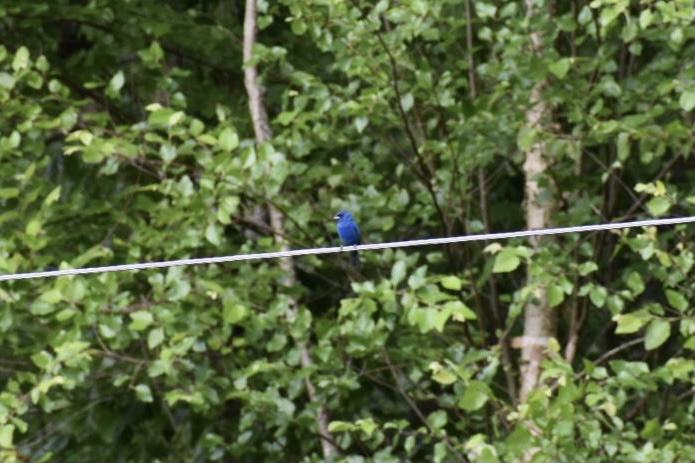
Every autumn, billions of birds undertake a treacherous journey south during fall migration. The skies over Forsyth County are part of an area known by scientists as the Atlantic Flyway. According to the Audubon Society, as many as 500 different species of birds will use this "avian superhighway" from late July through early December to travel from as far north as Greenland to the Caribbean, Central and South America to overwinter.
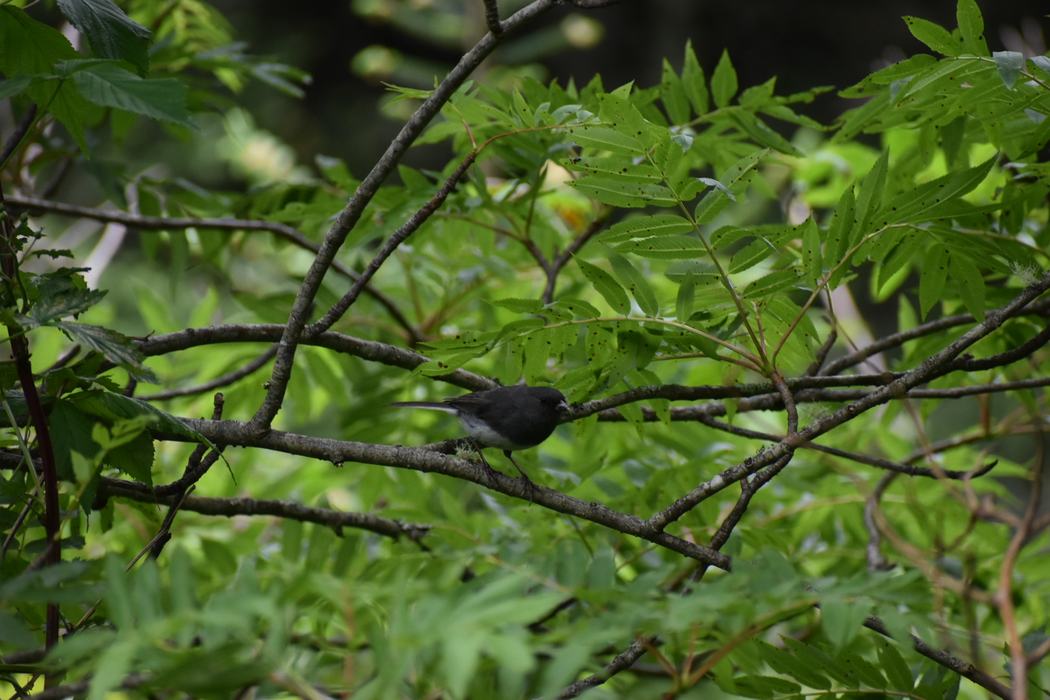
An article published in the winter 2018 issue of "Audubon" describes a study that was conducted to estimate the number of birds that do not safely make it through fall migration. The results estimated a staggering decrease of nearly 2.6 billion birds between fall and spring migrations (Saha 2018). For some of these birds, natural causes like weather and predation are to blame.
However, for many more, the challenges that come with higher population density and urbanization are the root cause. These challenges include glass collisions, feral cats, habitat loss, artificial light, and climate change. The good news is that there are many actions citizens can take to be good neighbors to migratory birds passing through.
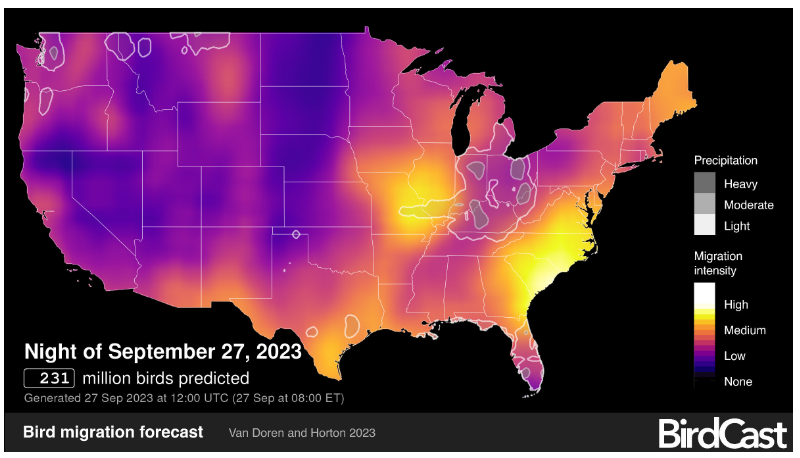
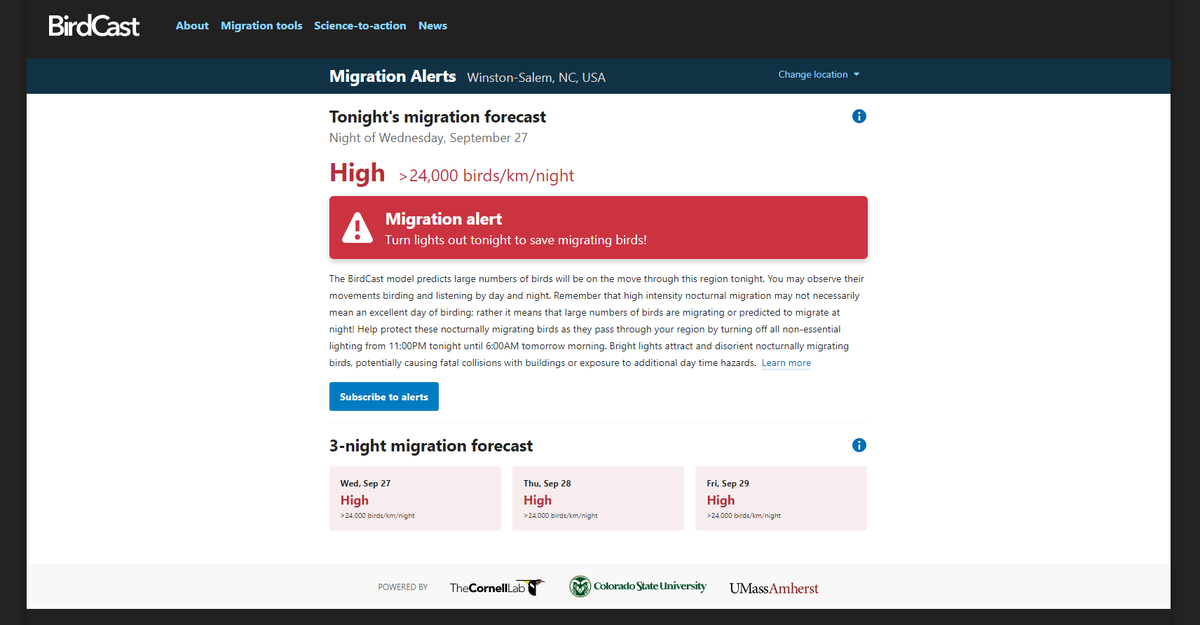
First, know when the highest numbers of birds are migrating. In the Piedmont Region of North Carolina, fall migration is most active during the months of September and October. A great tool for monitoring migratory bird activity is BirdCast. This tool allows you to view real-time migration data, as well as set migration alerts for any location you choose.
In addition to being aware of the rate of migration, there are many actions citizens can take at home to help make the skies over Forsyth County friendly for migrating birds.
- Turn off all non-essential lighting between the hours of 11 pm and 6 am. Most birds migrate at night and bright lights can attract and disorient them increasing building collisions and other hazards on the ground.
- Place anti-collision window decals on the outside of large windows.
- Make your backyard a Stopover Site. Stopover Sites provide food, water, and shelter for migrating birds.
- Food: replace non-native plants with native seed- and fruit-producing plants; put out feeders with seed blends (especially sunflower seeds), suet, bark butter, fruit, and nectar; clean feeders often to minimize spread of avian illnesses.
- Water: put out birdbaths; provide natural sources of water like streams, ponds, and creeks; clean birdbaths often to minimize spread of avian illnesses.
- Shelter: replace non-native plants with native plants; when possible, provide wooded areas, grasses, brush piles, leaf litter, fallen trees and branches; plant native evergreen trees.
- Provide indoor living space for free-roaming pets, especially cats. If outdoors, provide supervision to minimize predation.
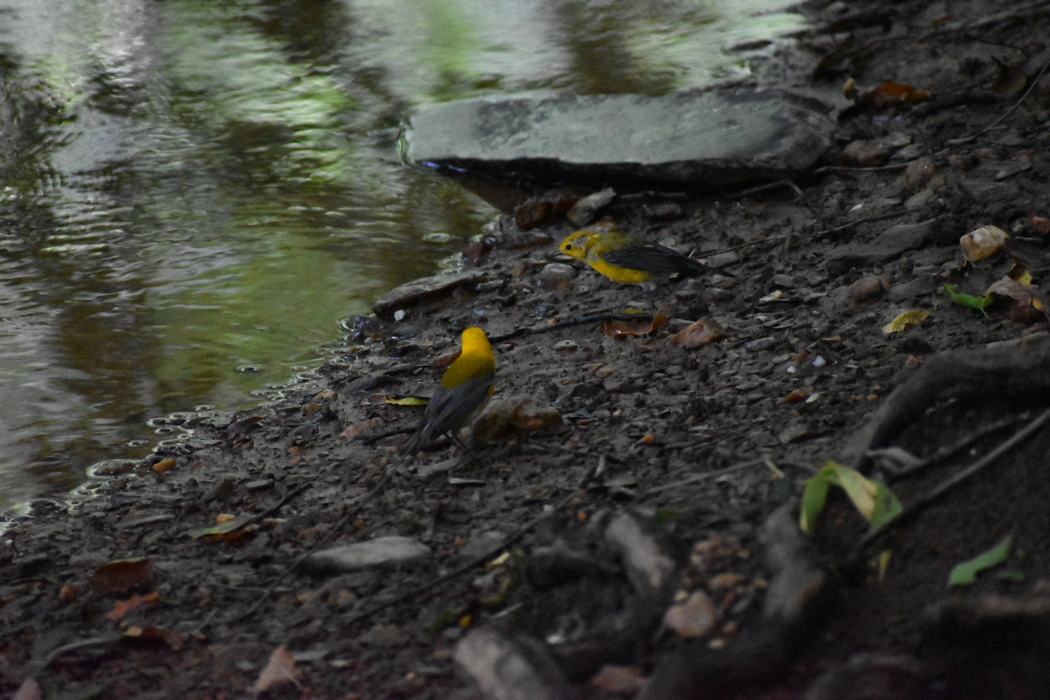
Birds are a vital part of an ecosystem providing control of pests, pollinating plants, dispersing seeds, and acting as an indicator of the general health of the environment. Birds also provide a gateway for curiosity, wonder, and exploration in nature. There are many threats facing bird populations today, but the good news is that there is something everyone can do to help make their journey a bit lighter. And, if we all work together, we'll get to experience the joy that comes with spotting a new species for the first time for years to come.
Join our mailing list!
Enter your email address to receive updates.
Written By